Sailboat Keel Types
Keel choice is not just a spec-sheet detail. It decides where the boat can sail, how well it points, how it behaves in a marina, what a grounding may cost, and which problems a surveyor needs to take seriously.
This guide is written for buyers comparing real used sailboats, not for designers trying to optimize a racing rule. The right keel is the one that fits your water, your appetite for maintenance, your tolerance for draft, and the kind of sailing you actually expect to do.
Table of Contents
- Full Keels and Modified Full Keels
- Understand why long-keel boats track so well offshore, why they maneuver slowly, and when the extra protection is worth the speed penalty.
- Fin Keels, Bulb Keels, and Spade Rudders
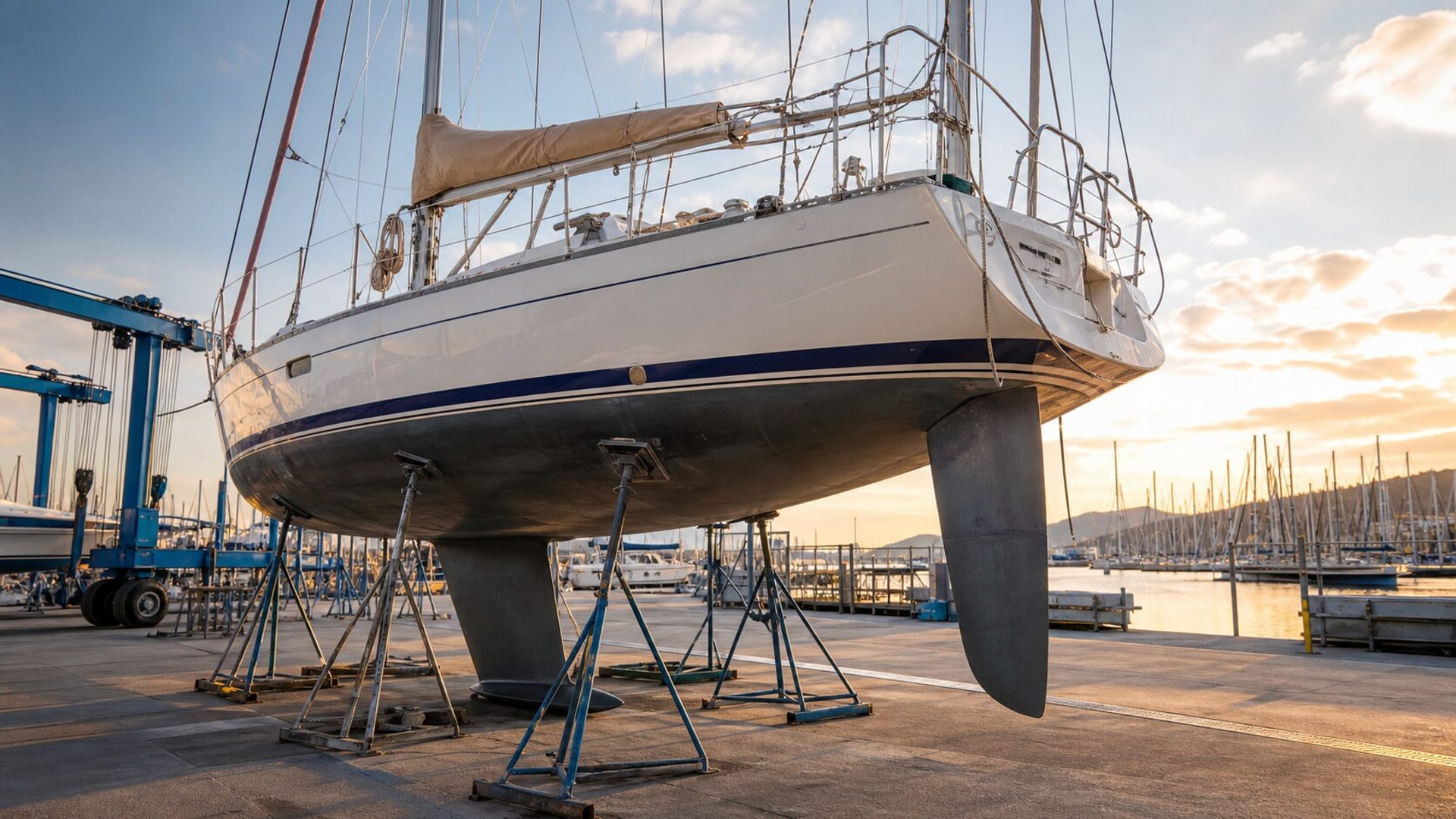
- Compare the modern default for pointing, speed, and handling against its inspection and grounding risks.
- Wing Keels and Shoal-Draft Keels
- Decide whether shallow draft is worth the compromise in upwind performance, grounding behavior, and offshore stability margin.
- Twin Keels and Bilge Keels
- Learn where twin keels make sense, especially in drying harbors, tidal estuaries, and places where a single deep fin is a liability.
- Centerboards, Swing Keels, and Lifting Keels
- Separate useful variable draft from expensive mechanical complexity before buying a shallow-water cruiser or trailer sailor.
- Canting Keels and High-Performance Appendages
- Understand why canting keels are fast, why they need extra foils, and why most cruisers should treat them as specialized racing systems.
- Choosing the Right Keel for Your Sailing
- Turn draft limits, sailing goals, survey findings, and maintenance tolerance into a practical keel decision.